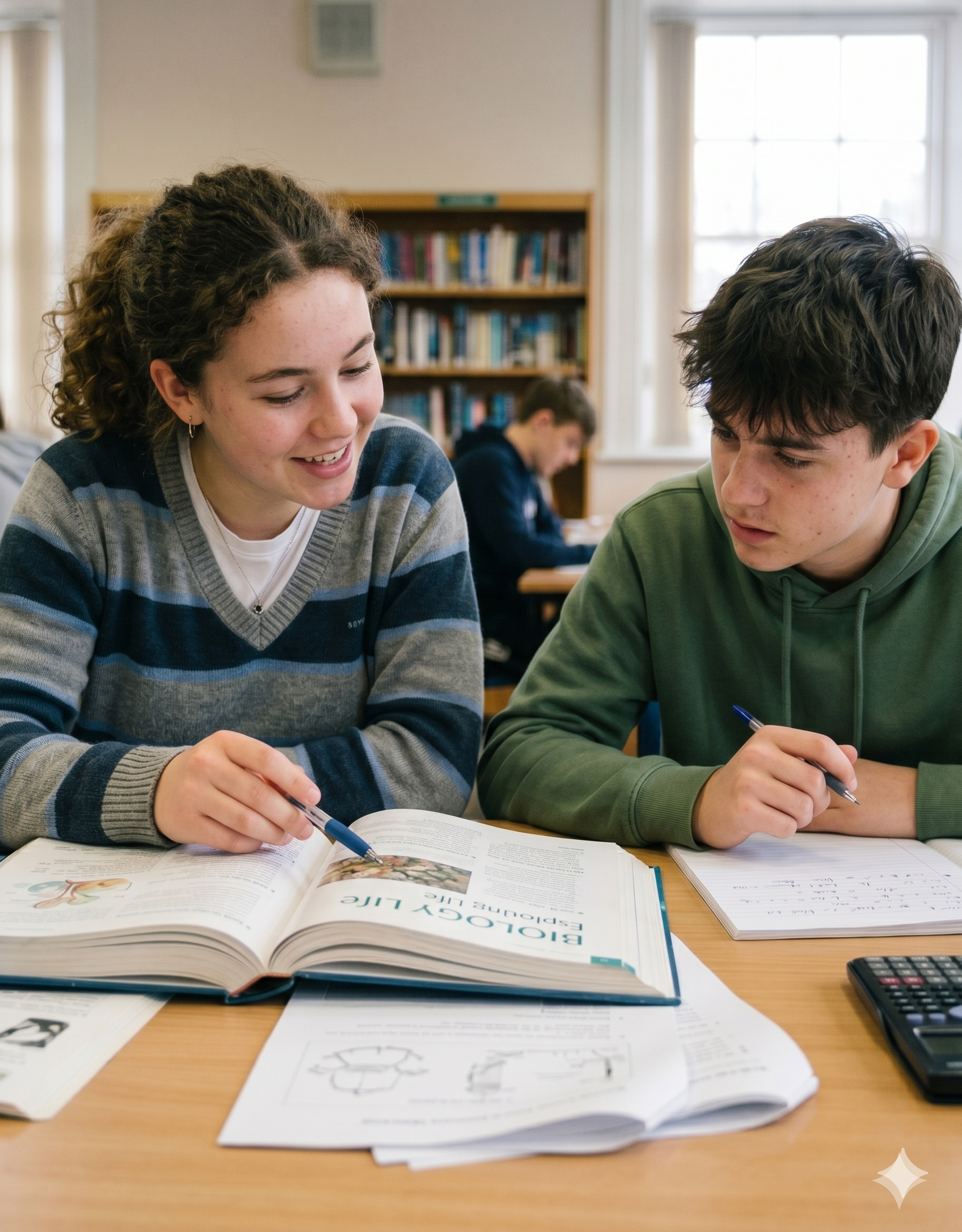

Goal: Empower students to become self-directed learners, using resources to deepen their understanding and achieve excellence.
Teaching Guidelines
Key Components of a Math Peer Tutoring Lesson
Recap previous concepts related to the current topic.
Ask a few quick questions to assess the student’s understanding of prior knowledge.
Clearly explain the new math concept or skill, using concrete examples and visual aids if needed.
Provide a concise explanation of key terms and procedures.
Work through practice problems together, explaining each step clearly.
Use open-ended questions to encourage the student to verbalize their thought process.
Identify and address any misconceptions as they arise.
Provide a set of practice problems for the student to solve independently.
Monitor progress and offer targeted feedback as needed.
Encourage self-checking of answers using a solution key.
Summarize the main concepts learned and review key points.
Ask the student to explain a key concept in their own words to reinforce understanding.
Address any remaining questions or areas of difficulty.
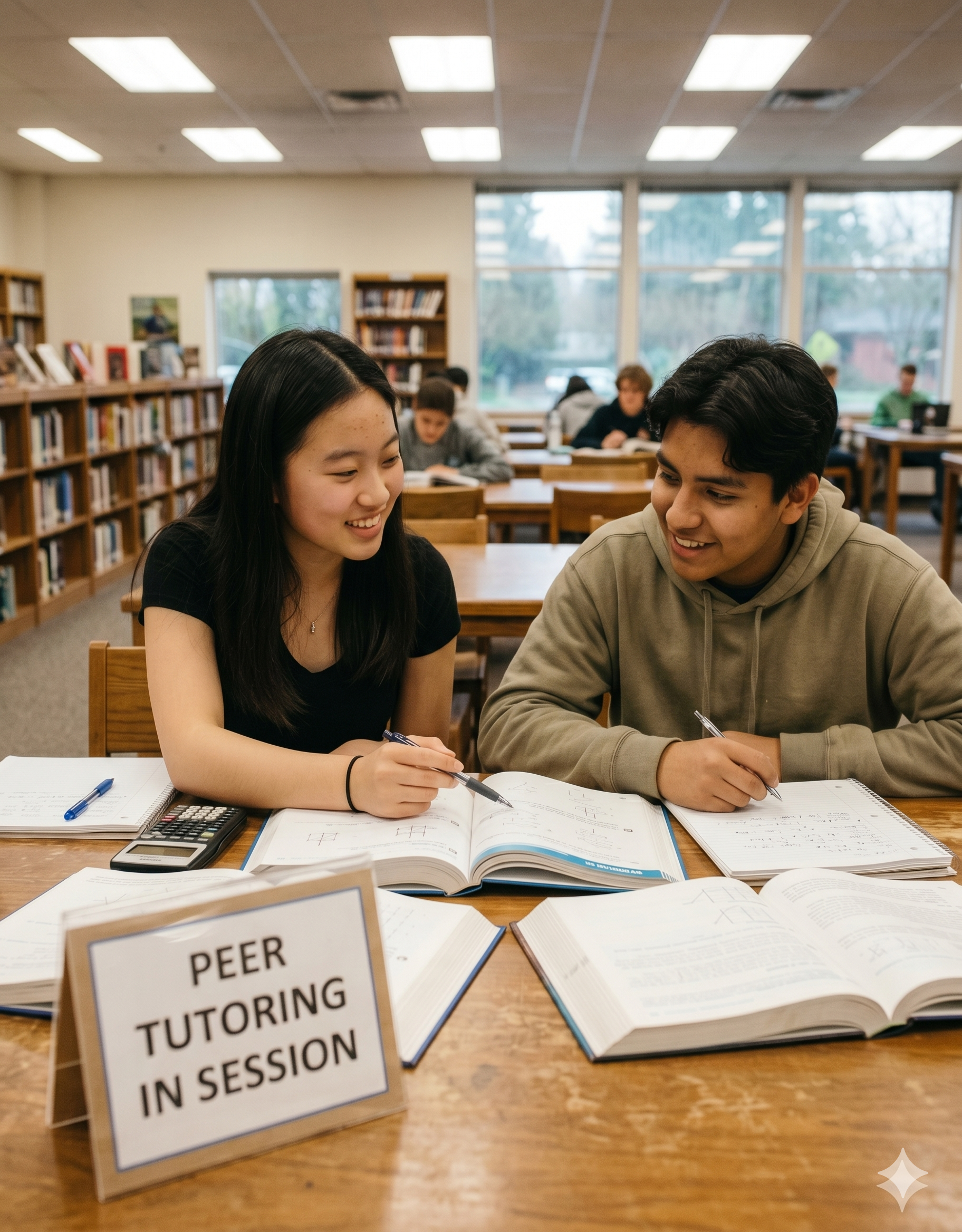
Guidelines for Effective Peer Tutoring
Adapt instruction to the student’s unique needs and strengths.
Use customized learning plans with specific resources and feedback.
Technology Integration
Use digital whiteboards (e.g., Jam board, Miro) for collaboration.
Incorporate polls, quizzes, and breakout rooms to keep students engaged.
Utilize shared documents (e.g., Google Docs) for real-time feedback.
Break content into manageable steps and gradually build complexity.
Step-by-Step Guidance: Focus on one concept at a time, offering tutorials for challenging topics.
Encourage participation through prompts, discussions, and role reversal activities (e.g., student as teacher).
Use student-led activities to boost comprehension.
Check for understanding using quizzes, polls, or exit tickets.
Encourage self-assessment to help students reflect on learning progress.
Cater to different learning styles by incorporating visual, audio, and text-based resources.
Assign pre-session materials to introduce concepts, reserving session time for interactive activities.
Set clear goals and celebrate small wins to keep morale high.
Encourage collaboration in small group sessions.
Allow flexible pacing, providing session recordings and additional practice materials as needed.
Use game-based learning tools (e.g., Kahoot!, Quizizz) to review topics in an engaging manner.
Establish a personal connection through regular check-ins and a supportive environment.